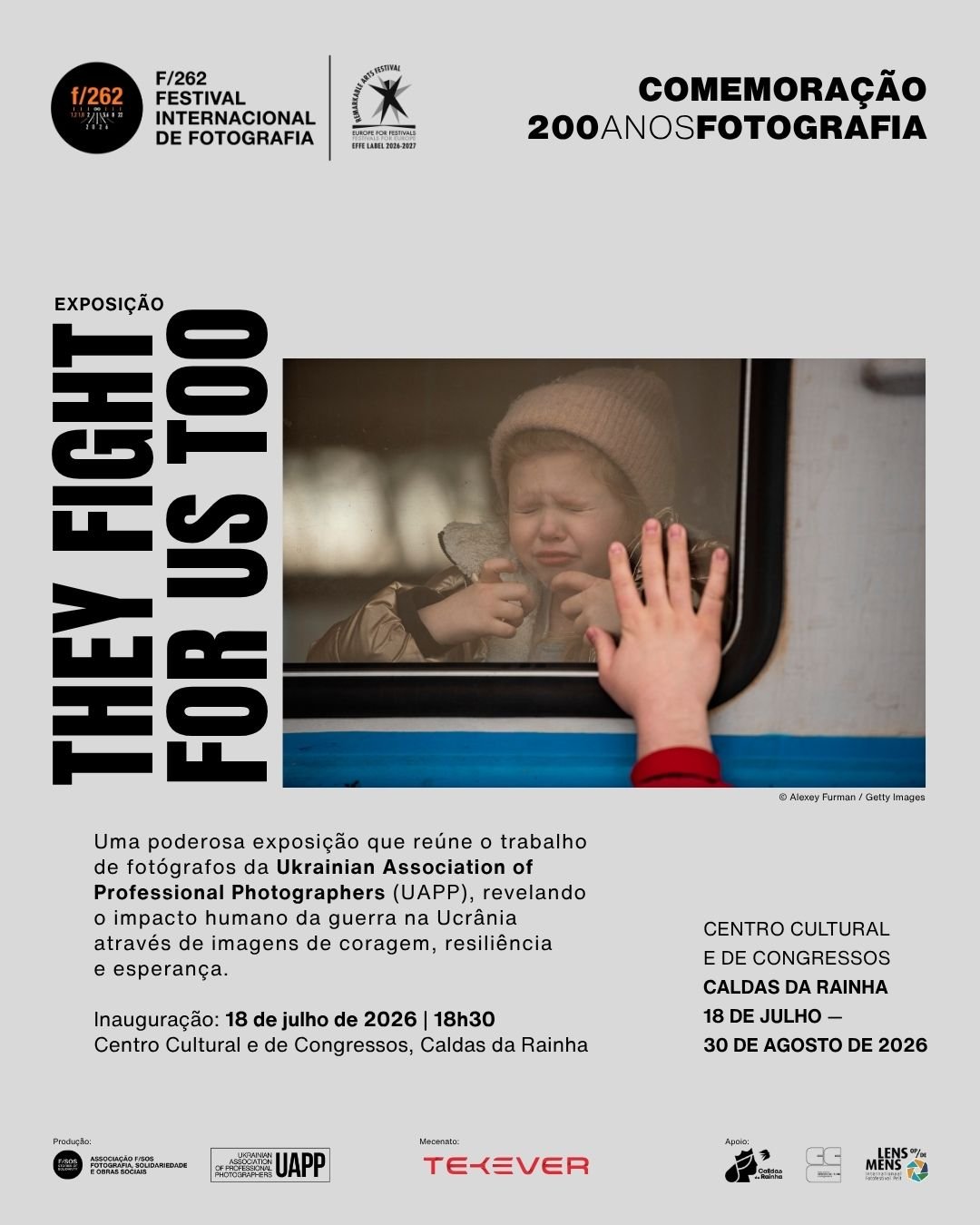
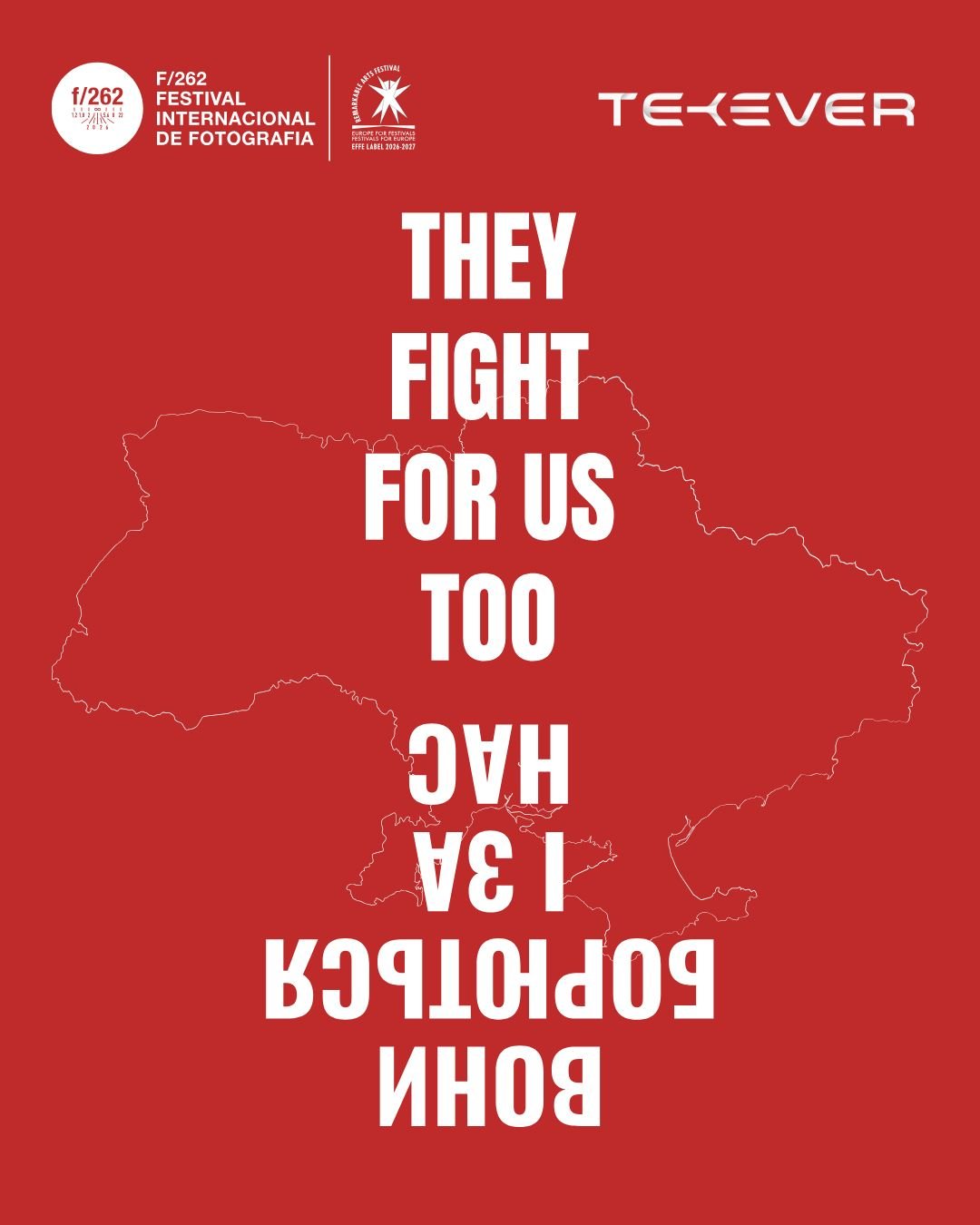
THEY FIGHT FOR US TOO
A powerful exhibition bringing together the work of photographers from the Ukrainian Association of Professional PhotographersTHEY FIGHT FOR US TOO
There are exhibitions that document events. Others become places of memory.
They Fight For Us Too brings together the work of some of the most prominent photographers of the Ukrainian Association of Professional Photographers (UAPP), an organisation that, since 2013, has promoted Ukrainian photography and represented its professional community internationally. Since the start of the full-scale invasion of Ukraine, many of these photographers have been documenting the war from the front line, turning photography into an instrument of testimony, memory and resistance.
The exhibition presents a visual journey that follows different dimensions of the conflict. From the destruction of cities to the daily life of the civilian population, from loss to hope, from exodus to reconstruction, each image reveals not only the effects of war, but also the extraordinary human capacity to resist.
The photographs have been published by some of the most important international media outlets and honoured with photojournalism awards. However, brought together in this space, they cease to be mere news. They become an archive of contemporary memory.
The title They Fight For Us Too reminds us that the defence of freedom, democracy and human dignity knows no borders. The war is taking place in Ukraine, but its consequences and the values at stake belong to us all.
More than an exhibition about war, this is an exhibition about people. About those who stayed. About those who lost everything. About those who continue to believe that memory is a form of resistance.
HORÁRIO DE FUNCIONAMENTO
SEGUNDA E TERÇA (Monday and Tusday)
10h00-13h00 & 14h00-18h00
QUARTA, QUINTA E SEXTA (Wednesday, Thursday and Friday)
10h00-13h00 & 14h00-21h00
SÁBADO E FERIADOS (Saturday and Holidays)
15h00-18h00
DOMINGO (Sunday)
Fechado (Closed)
The Ukrainian Association of Professional Photographers
Founded in 2013, the Ukrainian Association of Professional Photographers (UAPP) is a non-profit organisation dedicated to the development of professional photography in Ukraine, promoting educational, cultural and social projects, as well as the international representation of Ukrainian photographers. The association is an official member of the Federation of European Photographers (FEP) and has played a key role in preserving the visual memory of the war through the work of its members.


MESSAGE FROM HIS EXCELLENCY THE PRESIDENT OF THE REPUBLIC
Exhibition “They Fight For Us Too”
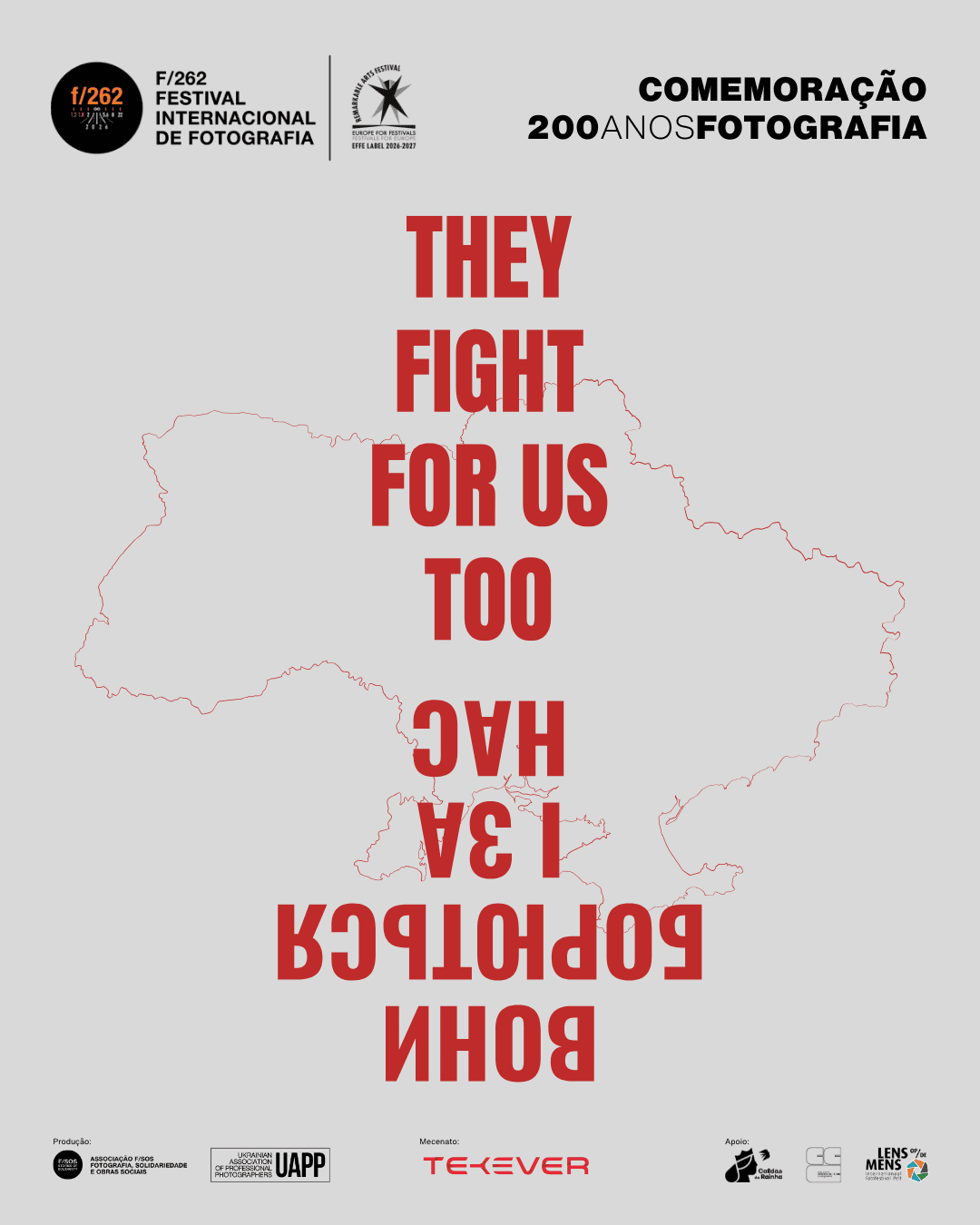
The image on the poster silences us. There is nothing to say. Its meaning is absolute and it nullifies any possible justification for a war.
We feel it as a wound in our very soul. This is the power of art. But there is another value within it too: that of waking us up, of shaking our indifference. A decade of war can, insidiously, trivialise pain and human folly. It is therefore urgent to return this subject to our priorities and to remember that ten years of an attack on a sovereign country are, above all, an eternity for those who live through the drama of war every single day.
The exhibition thus has this added merit: that of waking us up to the suffering of the victims of the war in Ukraine and, with them, the victims of all wars. A bewilderment that grows today, when international current affairs are marked by new threats and the outbreak of new conflicts.
The other side of this exhibition is the work of the photo reporter. Vulnerable, passionate and fearless. Several photojournalists have died in the war in Ukraine, and the list, sadly, keeps growing in other parts of the world. They join an ever-longer roll call: some went down in history, like Robert Capa; others were lost to anonymity, or to inquiries that never established the cause of their death. Whatever the outcome, it is a fascinating and extremely high-risk profession.
So often, their work ends up hijacked through “copy/paste” or diluted across distribution platforms.
For all these reasons, I extend my thanks to the Ukrainian Association of Photographers for bringing this testimony of war to public attention; to the organisation F/SOS — Photography, Solidarity and Social Work; to the support of Tekever; and to the Cultural and Congress Centre of Caldas da Rainha, for hosting the various initiatives of F/262 – International Photography Festival.
Finally, I leave an invitation to all to visit this exhibition, open until 30 August.
May none of us remain indifferent before these images.
ANTÓNIO JOSÉ MARTINS SEGURO
PRESIDENT OF THE PORTUGUESE REPUBLIC
MESSAGE FROM THE MAIN PARTNER — TEKEVER
The full-scale invasion of Ukraine, in 2022, profoundly transformed TEKEVER’s relationship with the country. Before any strategic decision, there was a human response to a people fighting for their freedom, sovereignty and right to a future.
Since then, TEKEVER has worked side by side with Ukraine, believing that technology must be at the service of protecting life. But protecting also means preserving memory.
That is the mission of They Fight For Us Too. The photographs brought together in this exhibition bear witness to the war from within, revealing not only destruction, but also the courage, resilience and humanity that persist in every community.
At TEKEVER we believe that documenting is also protecting. Because what we choose to remember today will help future generations understand the past and defend the values of freedom, democracy and human dignity.
It is an honour to support this initiative and to help ensure these stories continue to be seen, understood and preserved.
Ricardo Mendes
CEO, TEKEVER
Curatorship
There are photographs that document the present. Others become memory.
They Fight For Us Too was born from the encounter between photographers who chose to remain at the heart of the war to bear witness to reality, and a festival that believes photography remains one of the most powerful ways of preserving the truth.
Every image presented in this exhibition carries with it a story of courage, loss, resistance and hope. It does not seek to explain the war, nor to offer answers. It simply invites us to look. To stay with it. To understand that geographical distance never removes human responsibility.
None of this would have been possible without institutions that understood that culture, too, is a form of resistance.
Our deep gratitude to the Ukrainian Association of Professional Photographers, for the trust placed in this project and for the extraordinary work carried out in preserving Ukraine’s visual memory; to Lens op de Mens, for believing in photography as a universal language capable of bringing people and cultures closer together; and to TEKEVER, whose commitment made it possible to bring this testimony to Portugal and reach new audiences.
When the exhibition ends and the photographs return to their archives, what truly matters will remain: memory.
Because there are images that cease to belong to the moment in which they were taken.
They come to belong to the History we choose to preserve.
João Carlos
Curator of the exhibition and Artistic Director of F/262 – International Photography Festival
Director of F/SOS – Association for Photography, Solidarity and Social Work
Photography and Literature
A photograph fixes an instant.
Literature allows that instant to go on existing.
For the presentation of They Fight For Us Too at F/262, five Portuguese writers were invited to respond to a photograph from the exhibition. Not to describe, explain or interpret it, but to establish a free dialogue between image and word.
Each text emerges from an encounter with a single photograph. Some become fiction, others essay or reflection, revealing how the same image can open different paths of reading and emotion.
This dialogue between photography and literature extends the testimony of the Ukrainian photographers, creating new layers of memory and showing that art can take on different forms of resistance in the face of violence and forgetting.
The texts are included in the exhibition’s official catalogue and were written specifically for the Portuguese presentation of They Fight For Us Too.
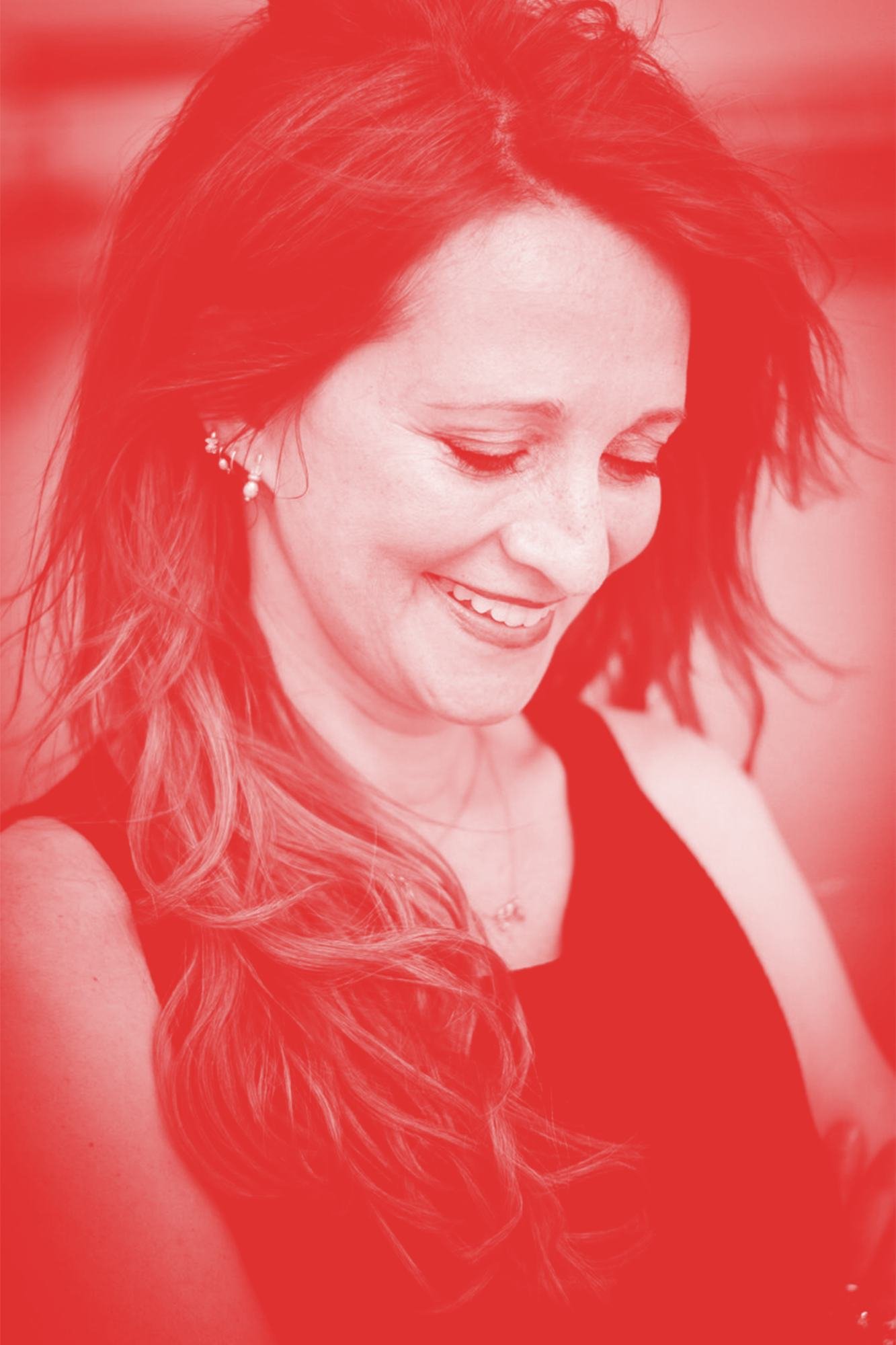
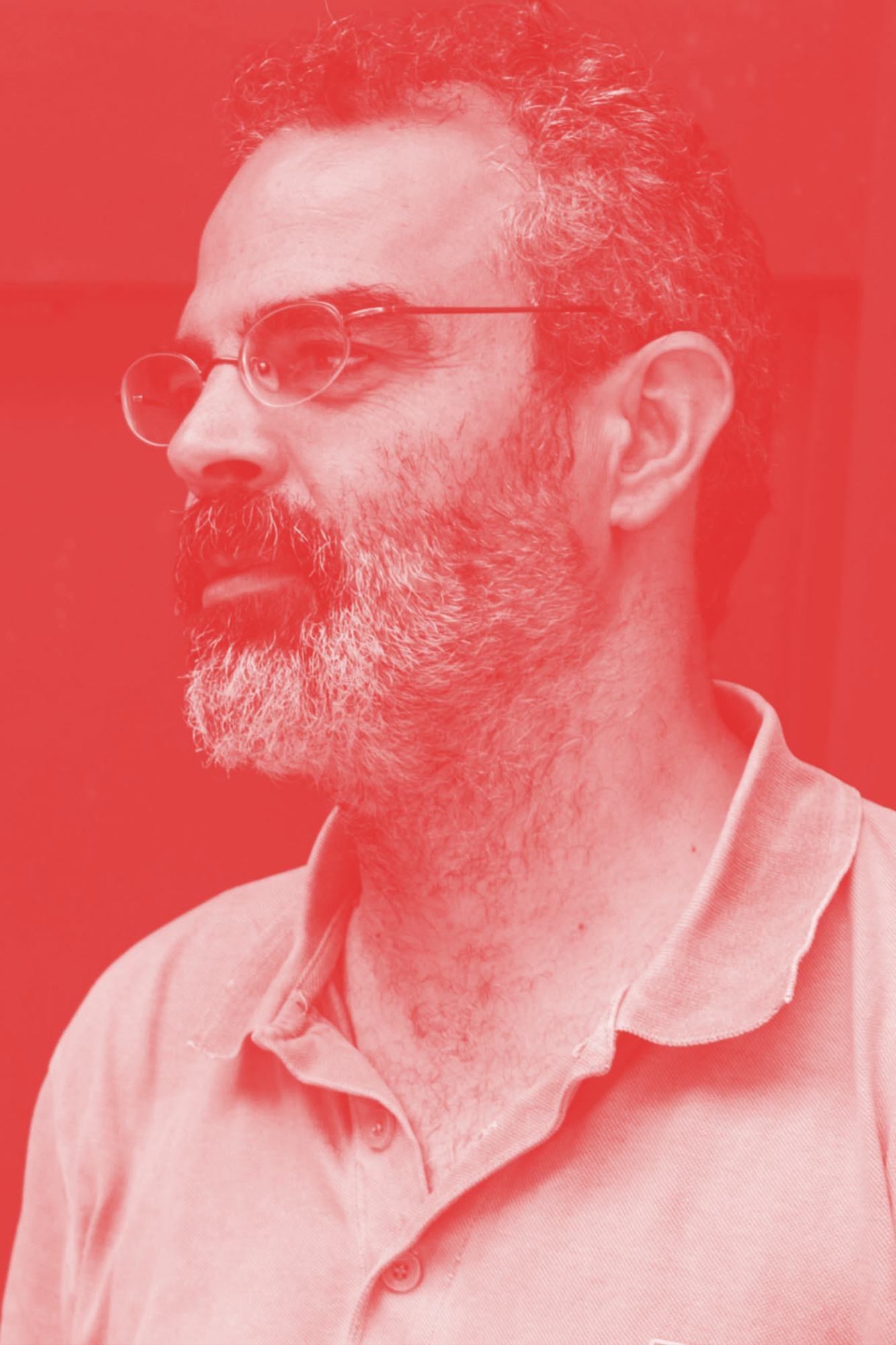
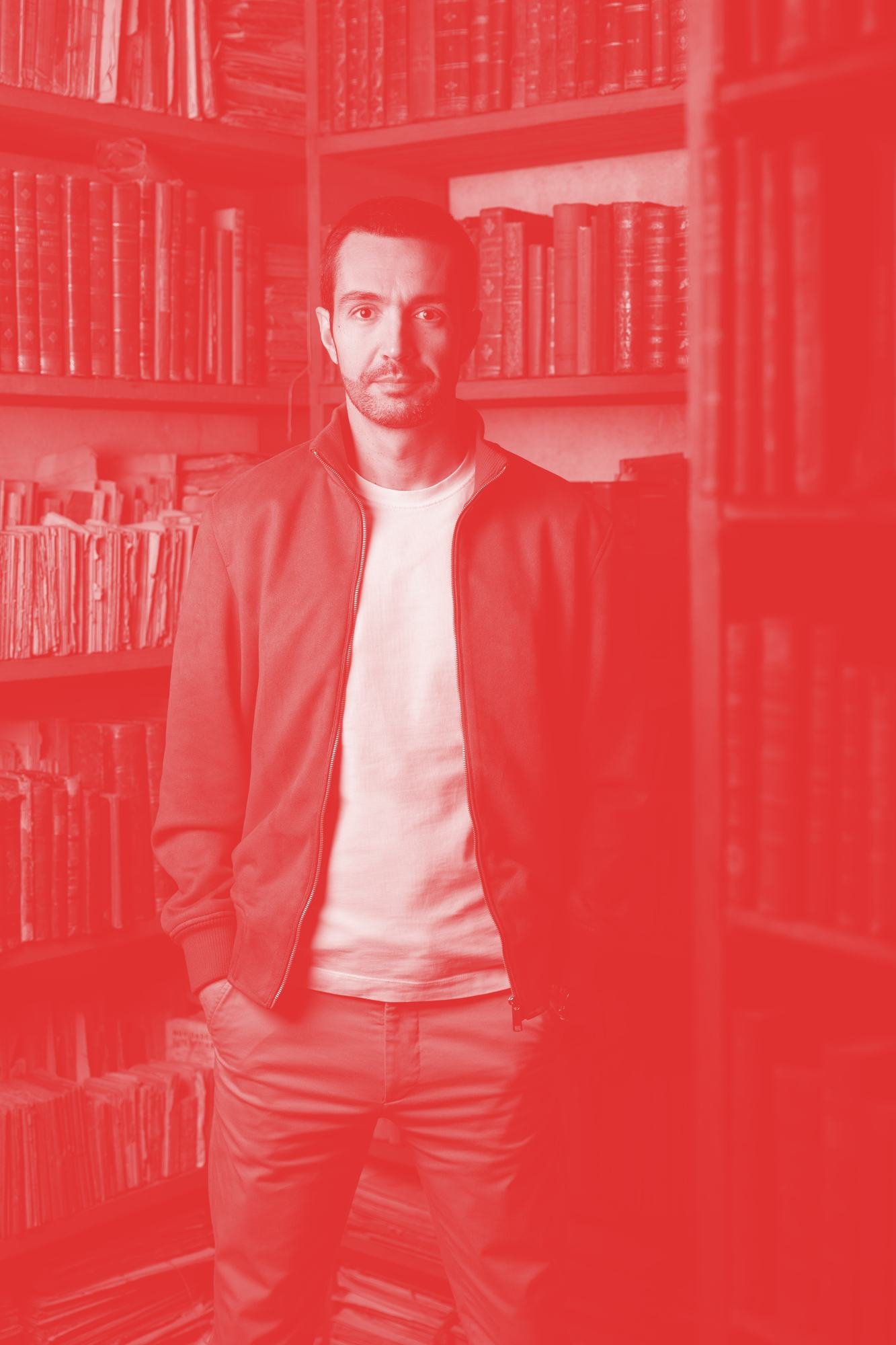
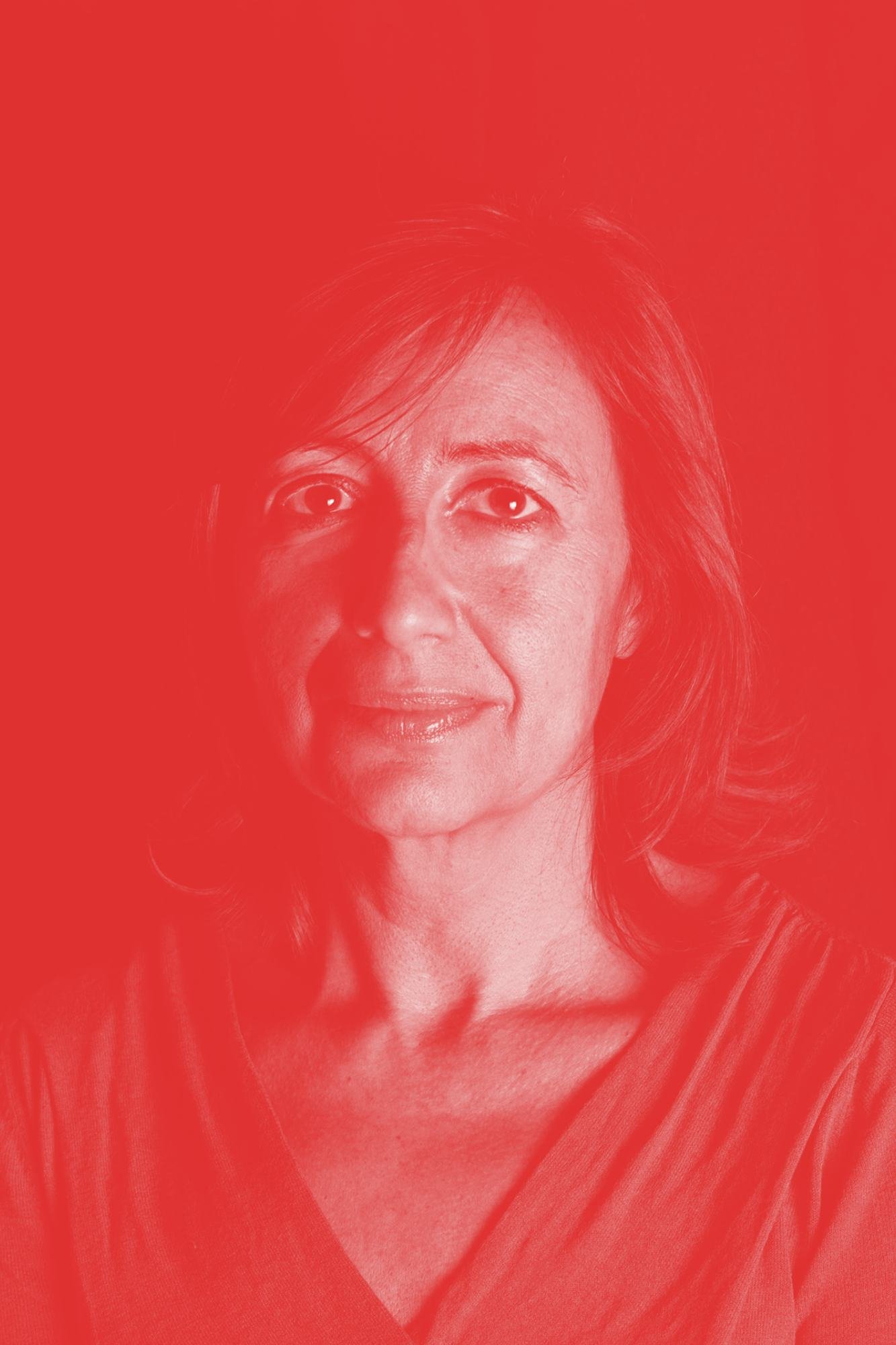
Guest writers
- Ana Bárbara Pedrosa
- Ana Margarida Carvalho
- Gonçalo M. Tavares
- Julieta Monginho
- Rui Couceiro
If photography preserves the instant, literature extends its memory.
THE BODIES OF ELEVEN RUSSIAN SOLDIERS LIE IN THE VILLAGE OF VILKHIVKA, RECENTLY RETAKEN BY UKRAINIAN FORCES NEAR KHARKIV, UKRAINE, MAY 9, 2022
In Mstyslav Chernov’s photograph, we see the brutality of war. There lie the bodies of eleven Russian soldiers. It is 2022, and for these people, there will be no future. They belong to the invading army, yet it is fair to say they are fighting a war that is not their own. They are soldiers like pawns on a chessboard: weak pieces sent forward by the king, offered up to the bullets by the king. What strikes most is the rawness: they all still have boots on, but one of them no longer has a head. Instead, the neck leads to a pool of blood and gore, the flesh mangled, almost as if by a butcher. The others have charred heads: people who, stripped of life, seem to turn into skeletons. Everything in the photograph points to a horror film, and the greatest horror is knowing that it is not a film, and that the curtain has not yet fallen on the screen. Lying down, the corpses have boots and bodies the colour of the earth, uniforms the colour of grass. It is still startling that each of them was someone’s child, that each one was once a toddler taking their first steps – with life ahead of them, how could one imagine an end in which one becomes cannon fodder? In the photograph, you cannot even see the village of Vilkhivka: you see only a patch of ground with eleven lives upon it – and, within them, so many more. A writer always tends to see the story behind an image, or ahead of it, and so within those inert boys are also the mothers far away, who must love Putin as much as Ukrainian mothers do. Chernov took the photograph on 9 May – Victory Day in Russia, the date on which Moscow celebrates the end of the Second World War. This inert, almost silent image makes the contrast plain: while the Kremlin paraded tanks in the public square, steeped in the martial glory of victory, its soldiers were rotting in a village some 900 kilometres away. To look today at Chernov’s work, made yesterday, is to know that one is looking at an archive, that its impact is the same as Robert Capa’s photographs in Spain or Nick Ut’s in Vietnam. The photographer faced horror head-on, and the fallen men become unwitting icons – aggressors and victims in the same moment, and with that they are no longer just any men watching a series on the sofa. By getting close, Chernov managed to show the world what lies outside the graphs, the images with arrows telling us where one army is and another. Instead of the distance of a drone, the reality of the ant’s-eye view, of destroyed bodies – this is the reality of a defeated army. And, with this, the photographer holds time still, and records a reality so raw and bloody that it becomes impossible to trivialise it. The War Remnants Museum in Ho Chi Minh City shows the same rawness, leaves the material evidence of what was real life, not merely an episode from distant history books. Here, we cannot even take refuge in distance. The year 2022 was ten minutes ago, and it will be ten minutes from now too. It is hard to look away from the photograph, however much revulsion it causes. The image disturbs, it is almost unbearable: it must be very difficult to see only an enemy there, and not a poor wretch who perhaps never wanted to be there. The griminess of the image shows that in war everything is dirty, there are no simple answers, and that it consists of people on two sides fighting wars in the name of others – in the name of States that are often executioners of their own people. They are eleven sons, that much is certain. Some may be fathers, others brothers, others lovers. Perhaps some are all of these. Perhaps, on the other side of the border, and longing so much for the war to end, someone is still waiting for them, not knowing they have already gone and will not return. There lie the mortal remains of those who were once living people while the war goes on — and with it, there will be more photographs like these.
Ana Bárbara Pedrosa

DRY RAIN
Mother, when you wake up you’ll be so proud of me. I’ve already killed more than a thousand and beheaded three hundred. I leave them to dry in the sun, on our wall, to scare off more unwanted visitors, like I saw in the cowboy-and-Indian films, so they’ll be so frightened they won’t come near our garden. The ants pester me, what a persistent little creature, they never pause, never take a day off, they creep into every crevice, insatiable, they carry off my remains at night, steal my trophies when I’m not looking. I’ve already covered the wall in the yellow ant poison you kept in the baby’s milk tin. In the late afternoon, I lie down with my ears against the ground, I can hear them coming, so slow, so creeping, but then I look at that row of shrivelled heads and think I’ve done a fine job. If Miss Oksana saw this, she’d give me an A, I’m sure, but school closed on that day when the dust from the roads rose up to the tallest treetops and came back down again, like a dry rain, and left everything the colour of fog. I thought it was so pretty, but grown-ups don’t seem to like the unexpected, they always want the same thing, green in spring, white in winter, how dull. I was so happy when school closed, that way we can spend more time together, mother, and with my baby brother too, and I wished this long holiday could last forever, me eating pumpkin jam every day until my tummy aches and the whites of my eyes start turning orange. But the grown-ups just have startled eyebrows and panicked mouths, any bang unsettles them, they dart in different directions, like ants. I like it when the blasts make the birds scatter, it’s like all the trees undress at once, then they come back, I don’t know if it’s the same ones, maybe it’s another flock passing through, taking turns, flying in circles through the forest, landing in ports they think are safe, it used to be the seasons that made them migrate, do you think they take over other birds’ nests and adopt their eggs? I like the sound of wings when they flap very fast, like you, mother, tearing sheets to make bandages, which soak with blood on the neighbour’s chest, or on the parachutist’s head. I like surprises, I’m not easily scared, unlike the birds and the grown-ups. And the ants. Memory is a very cunning little trick. Miss Oksana wouldn’t allow it. That’s why I was so happy, when I woke up in the morning and saw it. The surprise you’d prepared for me, just as I’d longed for, a war tank in the garden, with a real cannon and turret. How did you guess I wanted one just like the one that ended up overturned at the crossroads up ahead? I still can’t open the hatch but I’ve been practising every day. I want everything, because you give me everything. And everything you give me, I’ll give back to you twice over, dear mother. The jams, the wonder, the chaos, the fallen wings. I do everything just as you taught me, so you can rest. You need to rest so much and I’m so watchful so that not even a mouse’s paws or a spider’s legs can disturb you. Little brother cries if he wakes and digs his nails into your dry nipples. I do everything just as you taught me, tomatoes get along well with basil, onions prefer spinach, and garlic is friends with peas. They’re allied plants, that’s what you explained to me. That’s why the aphids bother me so much, I crush them between my thumbs and cut the caterpillars’ heads off with a piece of glass from our window. It was a hawk gone wild that flew into the windowpanes. It was chasing a drone and lost its bearings. It lost an eye, and hurt a wing, wandered about the garden, half dazed, taking clumsy leaps, without a shred of dignity, like a headless chicken, until the cats pounced on it. Not a feather upon a feather was left. I already went to your room, but I closed the door very slowly, and turned the lock like a hatch, you’re still sleeping so peacefully, the baby’s little hand so abandoned. More than ten days have passed now, or maybe twenty, what a long sleep, and perhaps I’d like to sleep too, I could lie down in your bed like a feather and you wouldn’t even notice, I promise, you wouldn’t even hear me breathing. But then who would look after the garden? Who would rid the vegetable patch of the army of aphids, of the brigades of caterpillars?
Ana Margarida de Carvalho
THE WOMAN WHO WALKS ON
This is it: wedding photographers rapidly became war photographers. Perhaps with the same cameras and certainly with the same fingers, thumb, index finger, whatever other fingers may be needed. But the gaze has changed. There is now a perhaps necessary blindness so that the eyes that see the horror do not lose their minds and go mad, the eyes themselves, not the mind. Eyes can go mad, yes, this happens a great deal to photographers who portray evil in all its extent; eyes that need to be hospitalised because they’ve collapsed; an iris that, within the whole room of the eye, suddenly starts banging against the walls of its own organic system. It is necessary to prevent the eyes from losing their mind. From becoming paranoid, demented, from starting to howl; it is necessary to protect the eyes, yes, but it is also necessary for the eyes of photographers to see what many people do not want shown, to see what many wish to hide. In this striking catalogue of photographs, any one of them is enough to activate that system of empathy that exists in living-living human beings – because there are living-dead human beings, a kind of ghosts whose empathy runs below minimum, like a car trying to move forward without fuel and without oil. Empathy is what allows a human being to be moved by other humans besides themselves. And yes, there are humans who only switch on the ignition of empathy in front of a mirror; how they love themselves.
These photographs are from another planet, the planet that reveals, that uncovers.
When an elderly woman, with a red headscarf covering her, walks on with, as her backdrop, not a beautiful natural landscape of lush, leafy trees, the kind of landscape so many painters have thrown onto canvas, the sunset, the mountains, the lakes, beautiful still nature, this is the landscape we’ve grown used to calling landscape. But behind this woman nothing is calm and nothing is natural, unless we consider that destruction is a natural act of the human being and of the world itself. But perhaps it is: does the human produce destruction the way it produces CO2, produce hatred the way it produces CO2; are we machines of hatred? Individually and collectively? If so, what a tragedy. For the truth is that, in this photo, the landscape is metallic and made of rubble; houses that appear ordinary, family homes, destroyed, the roof caved in, some floors collapsed, and probably this is the material remnant of some human deaths that are not visible here. What was made for a family to have dinner, the kitchen table, that mythical place where parents and grandparents gather with children, is now a kind of modern ruin, a ruin with none of the aura of ancient ruins. These are not the remains of a city two or three thousand years old; these are recent ruins, ruins that are sometimes only days old. Ruins made just now, ruins still warm, warm like any meal, but here it is the devil’s meal, warm because of the bombs, warm because of the dynamite, warm because of the destruction, warm because of the hatred. Hatred and destruction produce a heat that is not the heat of holidays and refreshing swims; it is a heat that makes an elderly woman walk down the street trying not to look sideways, at the destroyed houses. And yes, this photo also gives hope. One must keep walking on, and the human being keeps moving forward regardless of circumstances. Children keep running, men and women keep going about their various trades, and this elderly woman keeps on walking, we do not know where to, but this walking alone, this movement alone – this absence of desperate stillness alone, this refusal of a nostalgia that drags one down alone – makes this simple walk of a woman beside the destruction of houses, into a heroine. No great feats are needed, there is no need to summon Ulysses to begin his hero’s work on a Monday, like some civil servant from the heroes’ department. The heroes are today in Ukraine, everywhere, and here is this heroine whose name we do not know but who refused to sit or lie down on the ground and give up. One must keep walking even for those who move forward with difficulty. This is what this photograph is: a courageous woman walks on beside a material destruction that failed to reach the power of the human heart, which resists, resists, resists.
Gonçalo M. Tavares
THE CAT AND THE CHILD DO NOT THINK OF YESTERDAY NOR FEAR TOMORROW
The packed suitcase waits at the door of a building. Perhaps no one will come down for it now. For the first time, the sky is orange for everyone, reflecting the fire consuming the earth. A missile has pierced the asphalt, leaving its tail sticking out. Another opened a crater in the middle of a yard; a man stands inside it, surveying what is left of him. An improvised tourniquet grips a woman’s bleeding leg. Another has blood seeping from the bandage around her head and says with her eyes: this blood that has splashed my arms and legs is not only mine. A light is on in the dozens of exposed rooms of a building that has lost its facade. Laid bare, the intimacy of a bedroom: the bed with its sheets thrown aside in the urgency of flight, a bedside table, a toy. Facing the street, on display for passers-by, a life that belonged to someone. Always in view, the lottery of war: one building untouched and, beside it, another that burst apart after being bombed. In another building, an image of Christ on the only wall still standing. And, next to the furniture spilling out through the missing facade, the laundry detergent that remained standing where everything else exploded. A building missing a corner. The icicle-like debris pouring from the disembowelled innards of another building whose shape can no longer be recognised. Cars overturned, like insects. A look of panic, a cat clutched to its owner’s chest, a man crouched down covering his ears. A woman weeping for the destruction inside the flat she lives in. A woman who cannot cry for her destroyed home, because all she can see is ashes. A man, amid the rubble, weeping beside bodies covered with sheets. So many stories in so few images. Girls, dressed in white, marrying boys dressed in military uniform, wondering, perhaps, bouquet in hand, for how much longer. There is no shortage of improvised crosses made from tree branches, marking on the ashes the places where the earth holds those who did not survive. Joining bridges that were once concrete, there are flimsy planks, as fragile as life. On the ground, a helmet pierced by three bullets tells the end of one among so many who ended there. A large teddy bear sits where fighters lie resting – perhaps it reminds them of the children left behind with their mothers. There are those who look after the animals – war always despises them even more than it despises people. A goat with singed fur emerges from a bunker, its colour gone, but its eyes still alive. In war, everything dies. Even a tank has died, melted before a facade equally melted. It can only be recognised by its gun barrel, the sole remnant of dignity raised to the skies choked with smoke from the explosions and fires. A man walking into the middle of the flames. People searching through the debris. On the asphalt, a notebook, a soft toy, a pair of jeans and a harmonica. And, all around, earth that is black, black, black. A field of scorched sunflowers. A car with more holes than metal. And, bombed, a shanty neighbourhood that never imagined it could know greater misery. Trenches dug open to receive bodies. People kneeling, weeping over shapes covered in black plastic, again and again, ending up clinging to the cold plastic. A faceless body abandoned upon the ashes – no one will ever know who it was. The child who photographs with a mobile phone what their own memory will never forget. And what will remain in the memories of the fighters who walk towards death and, even so, smile for the photographer’s lens? The same photographer who, after years working at weddings, now captures a fly resting on a green leaf fallen upon an ocean of blood, or children wearing adult-sized camouflage and holding toy machine guns, or the flowers covering improvised graves made to receive children who no longer play, or the watermelon that satisfies several men, or the empty water bottles queued for the water supply, or the missile stopped by a pillar’s formwork, which brought everything else down except that pillar, preventing it from travelling further and striking another body, perhaps softer still. Or the man reading a book among the weeds. In the background, what must have been a house: a heap of bricks and rubble piled up – with life turned to debris, the man reads. Mines are photographed, waiting, patiently, for careless feet. The old man who decided to go and fight in the trenches is shown. The bridge resting upon the waters. The column of smoke rising between the houses. The little dog born in the midst of the bombardments. The life that, despite everything, still exists in so many eyes. The dark hangar which, so riddled with holes, looks like a starry sky. The man laid out on the stretcher, without a nose, receiving care. One more body, naked, but with its head dressed in bandages, no eyes or mouth visible. And the child who, in that hospital, is born right beside those who are dying. And, always, always, those who care and those who weep. Also those who take photographs with the soldiers, praise them and ask for their autographs. A bird crossing the horizon. A cigarette smoked or a coffee drunk between gunshots. So many who did not survive. The ferris wheel that did not fall, and other promises of joy. Life burnt to ash and, at the end, a cat stretching on a war tank and a child swinging on a swing in a city reduced to rubble.
Rui Couceiro
WHERE FREEDOM IS BORN
We remained, the hens.
The others, including the hand that fed us, invisible.
In place of the hand and its voice, buzzing up above and a strange object, inedible, alien to our ground.
What is happening?
We do not know. Looking up is denied us by the shortness of our necks. Nor do we need to, on the ground lies our sustenance. Nor do we look sideways. We would see others like us, hens, creatures, people. Someone searching for life among the wreckage. Survivors. The panic, the deceptive silence of a lethal device.
We are brief, we do not know what duration is.
Hunger and the moment, hunger and beaks in the earth, searching for grain, worms, vegetable scraps, remnants of whatever falls from that sky we have never seen. Until now, metal droppings, food for whom? For the fire that strikes defenceless creatures, ready to explode.
Beaks in the earth, eyes on the earth. The hands that sometimes come down to slit our throats, blood flowing from our bodies and from twisted wrists, the same red colour, the same smell.
So it is with all living beings. To some, like us, fell the ground, to others the sea, to others the heights. The higher, the more human. The higher, the greater the fall. The buzzing up above, coming from a hand still higher, still bloodier, still more human, a furious hunger.
Invisible, now. Hidden in an enclosure where they wait for death not to see them, like us. Bodies, buzzings, artefacts, all fallen from the heights to the common ground of the sacrificed.
They left us free beside the threat that does not trouble us, of the sky we know little, of the ground we know everything. Whoever has fallen helpless can learn from us how to search for grain, for worms, for the remnants of the sky that the torturers left behind.
Each body a silence, each body a soldier in the battle, defending its own ground. The place where they were born, the place where ears of corn and sunflower stalks grow, and they themselves. And we too, hens, as fertile as the common chernozem, precarious bearers of freedom against the hunger for domination, of dreaming against fear, of stillness against weapons.
Survivors, those who remain.
Hidden in an enclosure where they wait for death not to see them, holes dug beneath the fertile soil. The higher, the more human, the weapon hurled, the fear. The lower, the more human, talent against the blood-thirsty rage and the sap of the grasses, the fear, the daring.
All hunted, a constant struggle between being and not being.
To us fell the ground, where the stalks are born, where those who have ceased to be lie down.
So it is with countries, with the peoples who inhabit them, with whoever sings the melodies as deeply rooted in the earth as the roots, the language, freedom.
We remained, the hens, and this ground that sustains, sings and speaks, through the roots.
Voices that do not give up, that do not fall if they form a choir.
Voices that sing freedom in many colours, in many languages.
Julieta Monginho
TECHNICAL CREDITS
Exhibition
THEY FIGHT FOR US TOO
Curatorship
João Carlos
Organisation
F/262 – International Photography Festival
Production
Associação F/SOS – Photography, Solidarity and Social Work
In partnership with
Ukrainian Association of Professional Photographers (UAPP)
Main Partner
TEKEVER
International Partnership
Lens Op de Mens (Belgium)
Design
JA Design Studio
Installation
Andreia Vasconcelos, Cássia Mendes, Flávia Sardinha, João Agostinho, João Carlos, Lúcia Torregiani, Paulo Plaza
Venue
Caldas da Rainha Cultural and Congress Centre
Dates
18 July to 30 August 2026
Admission
Free
©2026 Associação F/SOS – Photography, Solidarity and Social Work
Produced by F/262 & Associação F/SOS



With the support of:

May – September 2026
Caldas da Rainha Portugal
About F/262
F/262 is an international photography festival rooted in Caldas da Rainha, Portugal.
Through exhibitions, talks, education, and public installations, the festival engages contemporary photography with place, community, and the world we share.
©2026 F/262 – Festival Internacional de Fotografia
Produced by Associação F/SOS – Fotografia, Solidariedade e Obras Sociais
 English (UK)