Claudio Napolitano
SEAQUAL INITIATIVE EXHIBITION

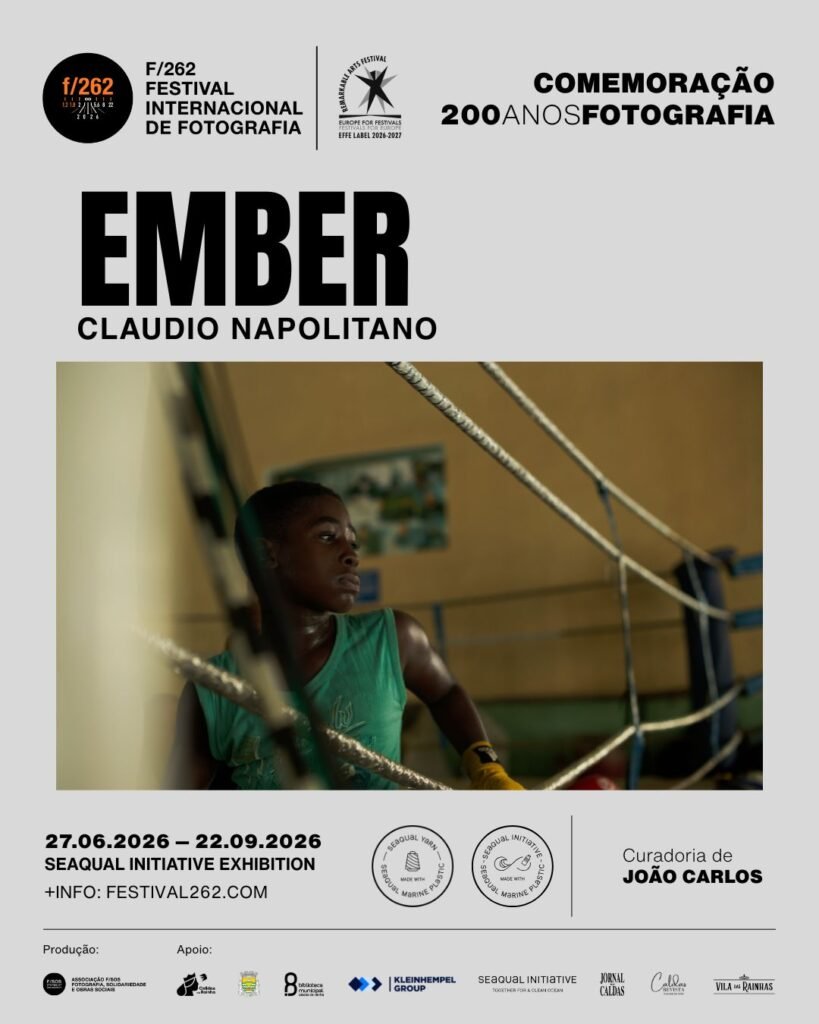
EMBER
It is not the visible flame, but the remaining ember that keeps burning when the fire seems to have gone out.
These portraits do not speak of poverty, but of presence: of those who live their lives with dignity, without denying their truth.
In every face there is a glowing ember, a warmth that does not seek to be seen, but that sustains.
EMBER is the metaphor for what stays alive amid stillness: contained beauty, silent strength, humanity that does not extinguish.
Text by Bets Basañez
Cuba
Cast & Crew
Photography: Claudio Napolitano
Produced by: Betsabé Basañez
Painter: Fernando Porras
Gallery Rep: Alexandra Snyder
Location: Foz do Arelho
Dates: 27 June – 20 September 2026
Photography: Claudio Napolitano
Curator: João Carlos
Programme: 200 Years of Photography Celebrations | F/262 International Photography Festival
🎧 Audio Description
Listen to an audio description of the exhibition poster for Ami Vitale, presented as part of the F/262 – International Photography Festival and the international celebrations marking 200 years of photography.
🎧 Audiodescrição
Ouça uma audiodescrição do cartaz da exposição Ami Vitale, apresentada no âmbito do F/262 – Festival Internacional de Fotografia e das comemorações internacionais dos 200 anos da fotografia.
Audio Description – Exhibition Poster
English
The image shows the poster for the exhibition Forgotten in the Past by Slovak photographer Martin Krystýnek, presented as part of the F/262 International Photography Festival and the international celebrations marking 200 years of photography.
The poster uses a light grey background with bold black typography. At the top appear the logos of the F/262 Festival and the official visual identity of the bicentennial celebrations of photography.
On the left, the exhibition title, Forgotten in the Past, is displayed in large black letters occupying much of the upper portion of the poster. To the right appears the photographer’s name, Martin Krystýnek.
At the centre is a black-and-white photograph depicting an outdoor settlement marked by mud, standing water, and scattered debris. In the foreground, slightly right of centre, stands a young barefoot child with curly hair, wearing an oversized dark sweater. The child faces the camera directly with a serious and vulnerable expression.
The ground surrounding the child is wet and uneven, covered with mud, puddles, and discarded objects. Reflections in the water create contrasting highlights across the surface.
In the background, a second child can be seen standing near a group of improvised structures made from wood, metal sheets, and concrete blocks. Wooden beams and rough constructions occupy much of the right side of the image, while simple dwellings stretch across the background. Beyond them, trees and vegetation emerge through a misty, overcast atmosphere.
The photograph is composed from a direct, eye-level perspective. The child in the foreground becomes the emotional focal point of the image, establishing an immediate visual connection with the viewer. The absence of colour reinforces the documentary character of the photograph and emphasizes the contrast between the human presence and the surrounding environment.
In the lower section of the poster are the exhibition details, including the presentation dates, from 27 June to 22 September 2026. The poster also highlights the partnership with the SEAQUAL Initiative and the curatorial credit to João Carlos. Along the bottom edge appear the logos of the festival’s supporting institutions and partners.
The overall composition conveys a sense of vulnerability, resilience, and human dignity. The poster introduces themes of memory, social exclusion, inequality, and living conditions, reflecting the humanist documentary approach that characterises Martin Krystýnek’s photographic work.
Audiodescrição – Cartaz da Exposição
Português
A imagem apresenta o cartaz da exposição Forgotten in the Past, do fotógrafo eslovaco Martin Krystýnek, integrada na programação do F/262 – Festival Internacional de Fotografia e nas comemorações dos 200 anos da fotografia.
O cartaz utiliza um fundo cinzento-claro com uma composição gráfica marcada por tipografia preta de grande dimensão. Na parte superior surgem os logótipos do F/262 e das comemorações internacionais dos duzentos anos da fotografia.
À esquerda, em letras negras muito grandes, lê-se o título da exposição: Forgotten in the Past. À direita surge o nome do autor, Martin Krystýnek.
Ao centro encontra-se uma fotografia a preto e branco. A imagem mostra um espaço exterior degradado, coberto de lama, água acumulada e resíduos espalhados pelo chão. Em primeiro plano, ligeiramente à direita do centro, encontra-se uma criança pequena descalça. Tem cabelo encaracolado e veste uma camisola escura larga. O seu rosto apresenta uma expressão séria e vulnerável, enquanto olha diretamente para a câmara.
A criança encontra-se de pé sobre terreno enlameado, rodeada por poças de água e objetos descartados. A textura da lama e da água reflete a luz, criando contrastes fortes entre as zonas claras e escuras da fotografia.
Ao fundo, ligeiramente desfocada, surge uma segunda criança junto a construções improvisadas feitas de madeira, chapas e blocos. Estruturas inclinadas e troncos de madeira ocupam parte do lado direito da imagem, enquanto edifícios simples e desgastados delimitam o espaço ao fundo. Para além das habitações é possível distinguir árvores e vegetação, parcialmente envolvidas por uma atmosfera cinzenta e húmida.
A fotografia utiliza uma composição frontal e direta. A criança em primeiro plano torna-se o ponto central da imagem, estabelecendo um contacto visual imediato com quem observa. A ausência de cor reforça a força emocional da cena e evidencia os contrastes entre a figura humana e o ambiente que a rodeia.
Na parte inferior do cartaz encontram-se as informações da exposição, incluindo as datas de apresentação, de 27 de junho a 22 de setembro de 2026. É também indicada a parceria com a SEAQUAL Initiative e a curadoria de João Carlos. Ao longo da margem inferior surgem os logótipos das entidades parceiras e apoiantes.
A composição transmite uma atmosfera de fragilidade, resistência e dignidade humana. O cartaz introduz temas relacionados com memória, exclusão social, desigualdade e condições de vida, refletindo a abordagem documental e humanista que caracteriza o trabalho fotográfico de Martin Krystýnek.




Produced by F/262 & Associação F/SOS



With the support of:

May – September 2026
Caldas da Rainha Portugal
About F/262
F/262 is an international photography festival rooted in Caldas da Rainha, Portugal.
Through exhibitions, talks, education, and public installations, the festival engages contemporary photography with place, community, and the world we share.
©2026 F/262 – Festival Internacional de Fotografia
Produced by Associação F/SOS – Fotografia, Solidariedade e Obras Sociais
 English (UK)